

Dental Bridges Gilbert
An Affordable Way to Replace Missing Teeth
Tooth loss is a common issue that affects people all across the country. According to epidemiological studies, approximately 178 million Americans are missing at least one of their teeth. Fortunately, just because you’re missing teeth doesn’t mean that you need to go the rest of your life with unsightly gaps in your smile. At Desert Springs Dental, Dr. Shandy Condie offers custom dental bridges in Gilbert as an affordable way to replace missing teeth. To get started with your initial consultation, give us a call!
What Is a Dental Bridge?
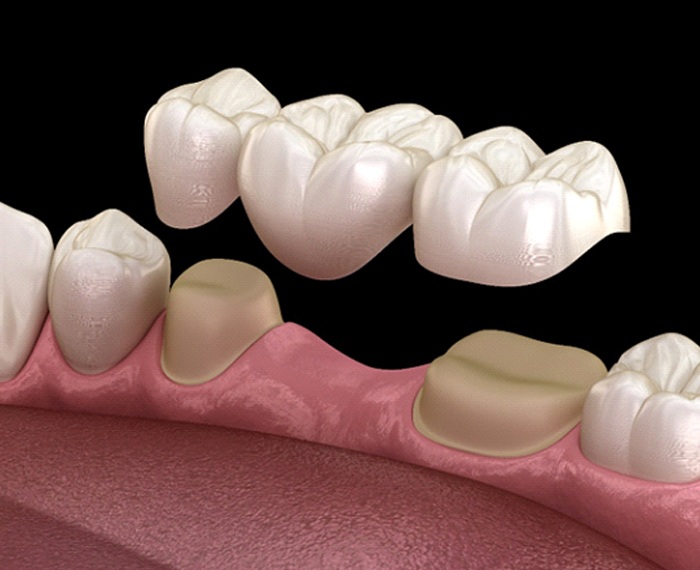
A dental bridge is a type of restoration that is used to replace one or more missing teeth in a row. This could be anywhere from one to four teeth. The bridge is composed of two crowns and a number of replacement teeth known as “pontics.” The crowns are anchored onto the adjacent teeth or implants depending on the type of bridge you opt for. Bridges can be made out of a variety of different materials, but porcelain and ceramic are generally ideal choices for strong, natural-looking restorations.
Types of Dental Bridges
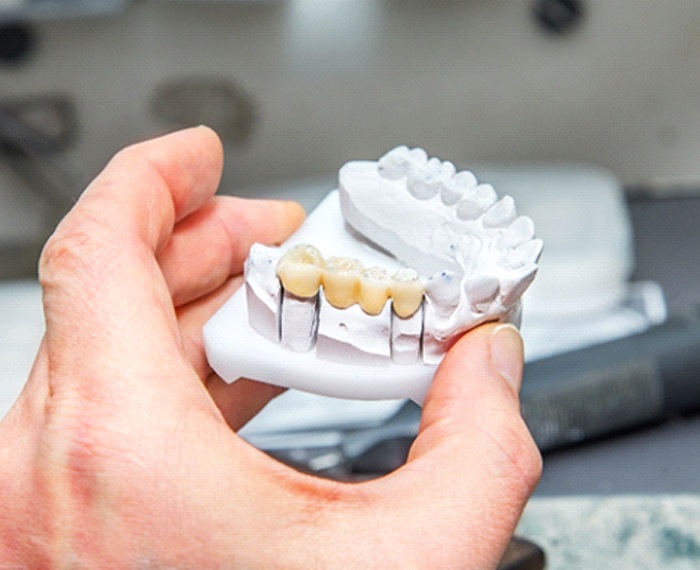
If it is determined that you make a good candidate for a dental bridge, there are two different types that you could end up with. Here’s what each one consists of:
Traditional Bridge
If you still have healthy teeth on each side of the gap that needs to be filled in, a traditional bridge is ideal. The teeth that support crowns are known as “abutment teeth,” and they need to be slightly altered for the bridge to fit properly. This type of restoration can be placed in just a few visits and are typically more affordable than their implant alternative.
Implant Bridge
Dental implant bridges can be used when there are three or more missing teeth in a row. Instead of being placed over abutment teeth, the crowns are secured to the titanium implants that are surgically placed in the jawbone to act as tooth roots. Implant bridges last longer than tradition bridges on average and help to prevent jawbone deterioration in the future as a result of tooth loss.
The Benefits of Dental Bridges

Dental bridges are cost-effective options for replacing missing teeth. In addition to providing strength and stability for chewing and speaking, they help to maintain the shape of your face. They also help to keep your natural teeth from shifting out of place and causing misalignment issues later on as a result of tooth loss.
Dental Bridges FAQs
Is Getting a Dental Bridge Painful?
First, your teeth will need preparation to support a dental bridge. Before that happens, Dr. Condie will numb your mouth to ensure you feel no pain throughout the process. All that’s needed is usually a local anesthetic, however, patients with severe anxiety can ask about sedation dentistry.
Once the dental bridge is in place, the underlying teeth may feel sensitive for the next few days. Luckily, any discomfort can easily be managed by taking over-the-counter pain medication, using cold compresses, and diligently following your dentist’s aftercare instructions. If your pain worsens, you should contact our office right away for help.
How Long Should a Dental Bridge Last?
Most patients can expect their dental bridge to last anywhere between five and 15 years. Of course, the exact lifespan can vary significantly based on factors like material, oral hygiene, and diet. It’s also worth noting that bridges that replace the front teeth typically last longer than those toward the back of the mouth, mainly because they’re subjected to as much wear and tear from chewing. Implant bridges are usually able to last several decades with proper care and maintenance.
How Many Teeth Can a Dental Bridge Replace?
Dental bridges are often used to replace one to two teeth. However, they can replace up to four missing teeth in a row if needed. It’s riskier to replace three or more teeth with a dental bridge because the longer the bridge extends, the less stable it becomes. In that case, Dr. Condie may recommend an implant bridge instead. It’s much more reliable for day-to-day use because implants are just as strong and secure as natural teeth, if not more so.
Do Dental Bridges Feel Natural?
Truthfully, it may take a few days for your permanent dental bridge to feel natural. Since your bridge is custom-made to fit your mouth perfectly, it shouldn’t feel too awkward or noticeable. Plus, they’re often made using durable materials that can withstand the chewing of almost any food, which means eating with a bridge shouldn’t feel strange. All in all, you’ll eventually forget you have a dental bridge in your mouth in the first place!
Can You Take a Dental Bridge Out?
Dental bridges are specially constructed to remain fixed in position within your mouth until they are removed by a qualified dentist such as Dr. Condie, and they can last for fifteen years or more if they receive excellent care. While some people may use the term “removable bridges,” this is a misnomer that refers to certain types of partial dentures that are designed to be removed by the patient for hygiene purposes. If you find that you are able to remove your dental bridge on your own, please contact our office in Gilbert so we can address the problem by repairing the appliance or addressing dental injuries or infections as necessary.
Can Dental Bridges Be Whitened?
Dental bridges cannot be whitened in the same way as natural teeth since the artificial teeth mounted on these appliances are constructed from nonporous materials that cannot be affected by the bleaching agents used during teeth whitening treatments. Receiving teeth whitening while wearing a dental bridge can leave a patient with an unevenly bright smile, so it’s usually best to undergo the cosmetic treatment before receiving or replacing your appliance. That way, your bridge can be shaded to match the brighter color of your new smile.
How Do I Clean Under My Dental Bridge?
While you can brush the artificial teeth supported by your dental bridge in the same way you would your natural teeth, it’s also important to clean underneath your appliance to prevent destructive oral infections that can compromise your restoration. There are several ways to do this, so you may want to experiment until you find a method that works for you. We suggest:
- Looping a piece of traditional floss through a threader and sliding it beneath your bridge. Then, carefully floss back and forth against the gums, restoration, and supporting teeth or implants.
- Using an interproximal brush (the type that looks like a Christmas tree) to clean the space between your gums and your restoration.
- Using a water flosser to clean debris from beneath your restoration with a steady stream of water.
Can Dental Bridges Get Cavities?
It’s impossible for a bridge to develop cavities since they are made from materials that are inedible to harmful oral bacteria, but the natural teeth or gum tissue supporting your appliance can still be compromised by oral infections. If this happens, your appliance may become misaligned or fall out of place. To prevent this, practice excellent oral hygiene by brushing, flossing, rinsing with antibacterial mouthwash, and carefully cleaning beneath your appliance every day to eliminate food debris and accumulations of plaque. A bridge may also loosen or fall out due to erosion of the cement holding it in place, and this can expose the remaining natural teeth to infection.